
Episode
30
Thu, 30 Jul 2026 12:00:00 +0000
Most cabinet shop owners feel good when they have lots of estimates waiting for customers to decide.
But here's the problem.
Estimates aren't revenue.
A customer saying they love your design isn't a signed contract. A verbal commitment doesn't schedule your shop. Hope doesn't buy materials or pay employees.
That's why Dominic Rubino uses a simple analogy in this episode:
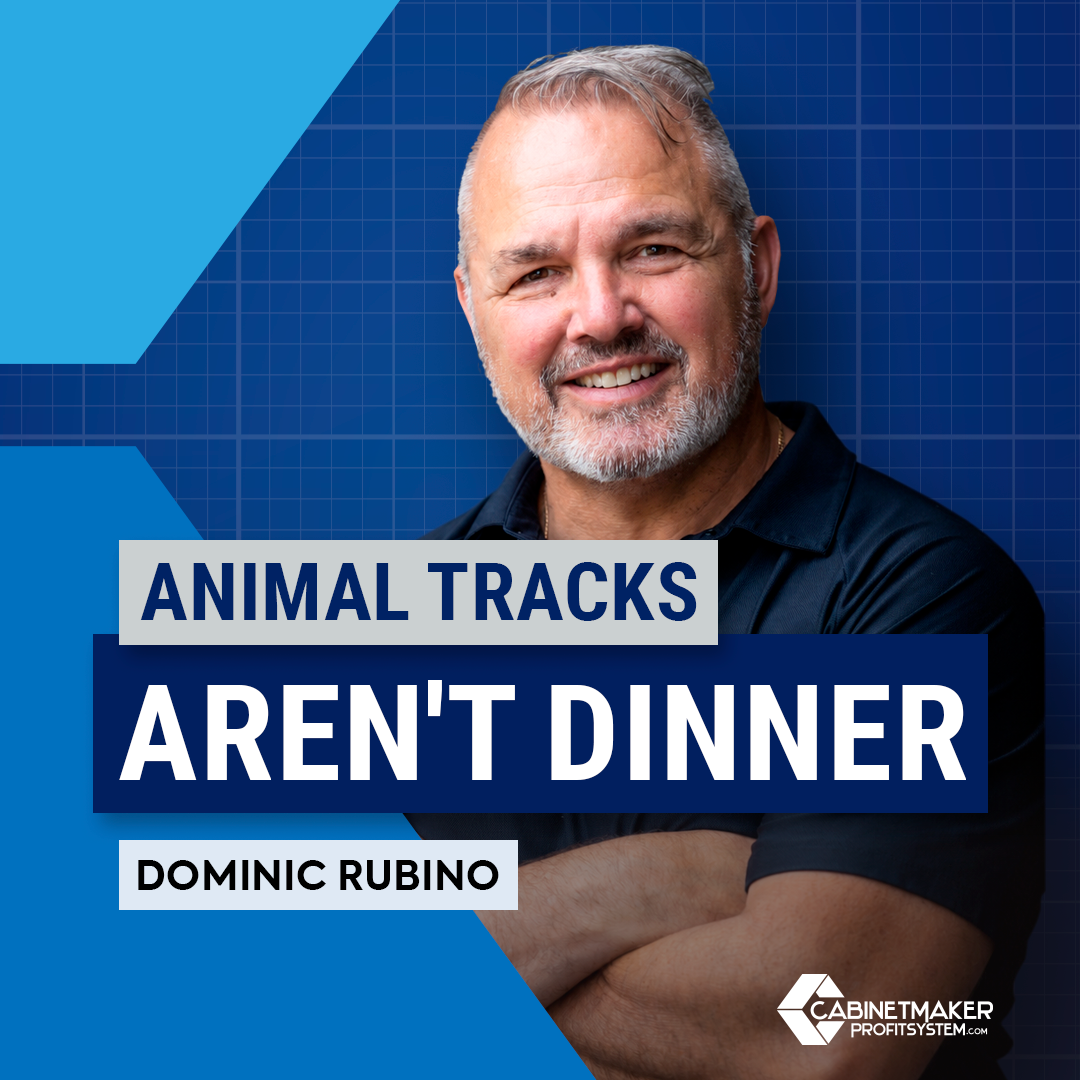
Animal tracks aren't dinner.
Seeing tracks means opportunity.
It doesn't mean you've caught anything.
The same is true for your sales pipeline.
Many businesses make hiring decisions, purchase materials, or plan production based on optimistic assumptions instead of reliable data. When those projects don't close, the entire business feels the impact.
Instead, Dominic recommends using a structured deal scoring system.
Each opportunity should be evaluated using objective criteria such as:
By assigning probability to every opportunity, owners create a weighted forecast that reflects reality—not optimism.
Better forecasting helps every department.
Production knows what's coming.
Purchasing orders materials at the right time.
Leadership hires before capacity becomes a problem.
Marketing knows when more leads are needed.
Most importantly, owners stop making emotional decisions based on wishful thinking.
Great businesses aren't built on hope.
They're built on systems.
And better forecasting is one of the simplest systems you can implement to reduce chaos and increase confidence.
If you want fewer surprises and better decisions inside your cabinet shop, this episode is a great place to start.
More about Dominic Rubino: Website | LinkedIn
Connect with Us:

.svg.webp)


