
A lot of cabinet shop owners know this feeling.
You are busy. The jobs are coming in. The crew is working. The shop is moving.
But somehow, the business still feels tight.
That was the story for James and Sallie Edrington, co-owners of Schrock’s Country Kitchens & Furniture in Kentucky.
They bought an Amish cabinet shop and furniture business after James had worked in the shop for several years. The business had tools, systems, customers, and a long history. But owning the business was a whole different job.
In this episode, Dominic Rubino and coach Pete Ficco talk with James and Sallie about what happened after they completed a Checkpoint 90 financial review.
What they found was simple but powerful:
Working harder was not the answer.
Seeing the numbers clearly was.
Buying a Business Is Not the Same as Running One
James and Sallie did not start from zero.
They bought an existing Amish cabinet shop. That sounds like a great head start, and in many ways, it was.
But it also meant they stepped right into a running business.
There was no slow ramp-up. No quiet learning curve. No small test phase.
They had to learn fast.
James understood the shop floor. He knew how to build. He knew the tools. But managing the numbers, pricing, inventory, sales, and profit was a different kind of work.
That is where many trade business owners get stuck.
They know the craft.
But the business side has its own rules.
The Numbers Were the Wake-Up Call
Before the Checkpoint 90 review, James thought they were doing okay with their numbers.
Then Dominic and Pete started asking deeper questions.
Cost of goods sold. Gross profit margin. Inventory days. Rework. Lead tracking. Conversion rates.
That changed the conversation.
James and Sallie realized they were not tracking enough. And what they were not tracking was hurting the business.
One of the biggest issues was cost of goods sold.
James realized it was not just materials. It was mistakes. Rework. Missing systems. Jobs that took too long. Small problems that added up.
That is a big lesson for cabinet shop owners and contractors.
Profit does not only disappear in one big mistake.
It often leaks out through small issues nobody is tracking.
Gross Margin Matters
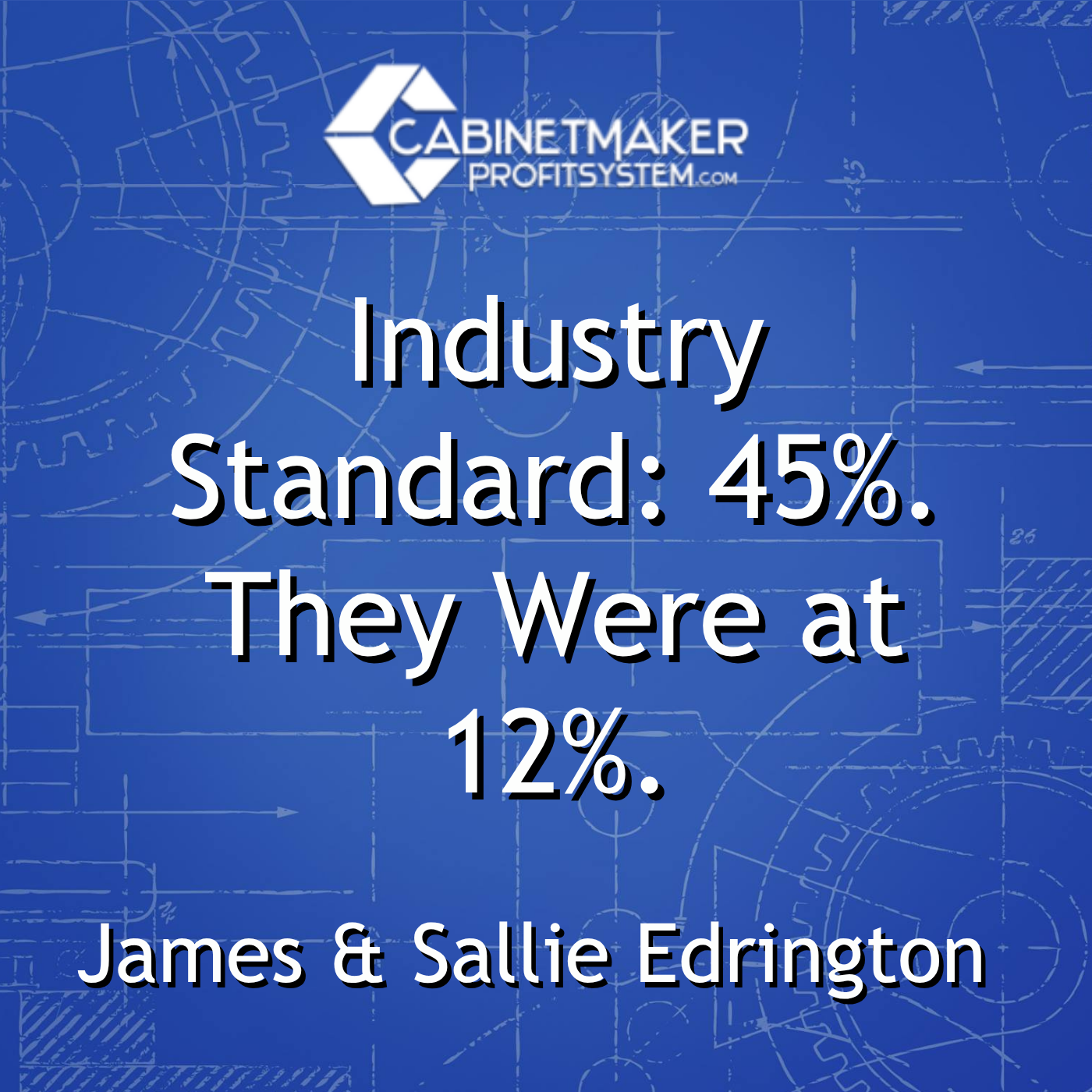
One of the biggest moments in the episode came when Dominic talked about gross profit margin.
James and Sallie thought they were aiming for around 25%.
But the review showed they were far below where they needed to be.
That is a hard thing to hear.
But it also gave them a starting point.
Instead of guessing, they could now ask better questions:
Which jobs are profitable?
Which jobs drag on too long?
Which jobs are too small?
Which customers are worth keeping happy?
Where should pricing change?
For many shop owners, pricing is emotional.
You worry the customer will say no.
You worry you are too high.
You worry you will lose the job.
But as Dominic points out in the episode, if you are winning too many jobs, you may be too cheap.
A simple rule from the conversation:
If you are closing around 3 or 4 out of 10 jobs, your pricing may be in the right range.
If you are closing 8 out of 10, you are probably underpriced.
Inventory Was Tying Up Cash
Another big issue was inventory.
James and Sallie had far more inventory sitting in the business than the benchmark showed.
That matters because inventory is cash.
If material is sitting on a shelf and not being used, that money is not helping the business grow.
After the report, James started seeing which items needed to stay on hand and which items could be ordered quickly when needed.
That gave them a simple way to free up cash without making the business more complicated.
SOPs Helped Sallie Close Faster
One of the best parts of the episode was hearing what changed for Sallie in the furniture side of the business.
Schrock’s is not a regular furniture store.
Customers choose custom pieces, styles, finishes, and details. That can make the sales process slow.
So Sallie created a simple SOP and checklist for customer conversations.
The result?
She shortened some sales from weeks to just a few days.
That is a huge win.
And it did not come from a fancy system.
It came from writing down the steps, asking better questions, and keeping the process clear.
That is something every contractor can use.
Whether you sell cabinets, remodels, HVAC, plumbing, or electrical work, a simple checklist can make the customer experience smoother and help you close faster.
Working On the Business
James is still on the tools.
Like a lot of owners, he is still needed in production.
But one of his goals is to spend more time working on the business instead of always working in it.
That is where the real shift happens.
When owners make time to think, plan, track, and improve, the business starts to change.
Small improvements add up.
Better pricing. Better inventory. Better SOPs. Better sales tracking. Better job reports.
None of it has to be fancy.
But it does have to be done.
The Family Side of the Business
This episode is not just about numbers.
It is also about family.
James and Sallie run the business from their farm. Their kids are part of the reason they do what they do. They homeschool. They have lunch together. They are building a business that supports the life they want.
That is what makes this story so easy to relate to.
Most trade business owners are not just chasing money.
They want time.
They want control.
They want to provide for their family.
They want the business to stop beating them up.
For James and Sallie, seeing the numbers gave them motivation. It gave them direction. And it helped them start having better conversations about what to fix next.
Final Takeaway
If you run a cabinet shop, millwork company, renovation business, or construction trade business, this episode is a reminder:
You do not have to guess.
You can track the numbers.
You can fix pricing.
You can reduce rework.
You can clean up inventory.
You can build systems.
And you can start working on the business, not just in it.
Listen to the full episode with Dominic Rubino, Pete Ficco, and James and Sallie Edrington.
More about Pete Ficco: LinkedIn | Company's website
Connect with Us:

.svg.webp)


